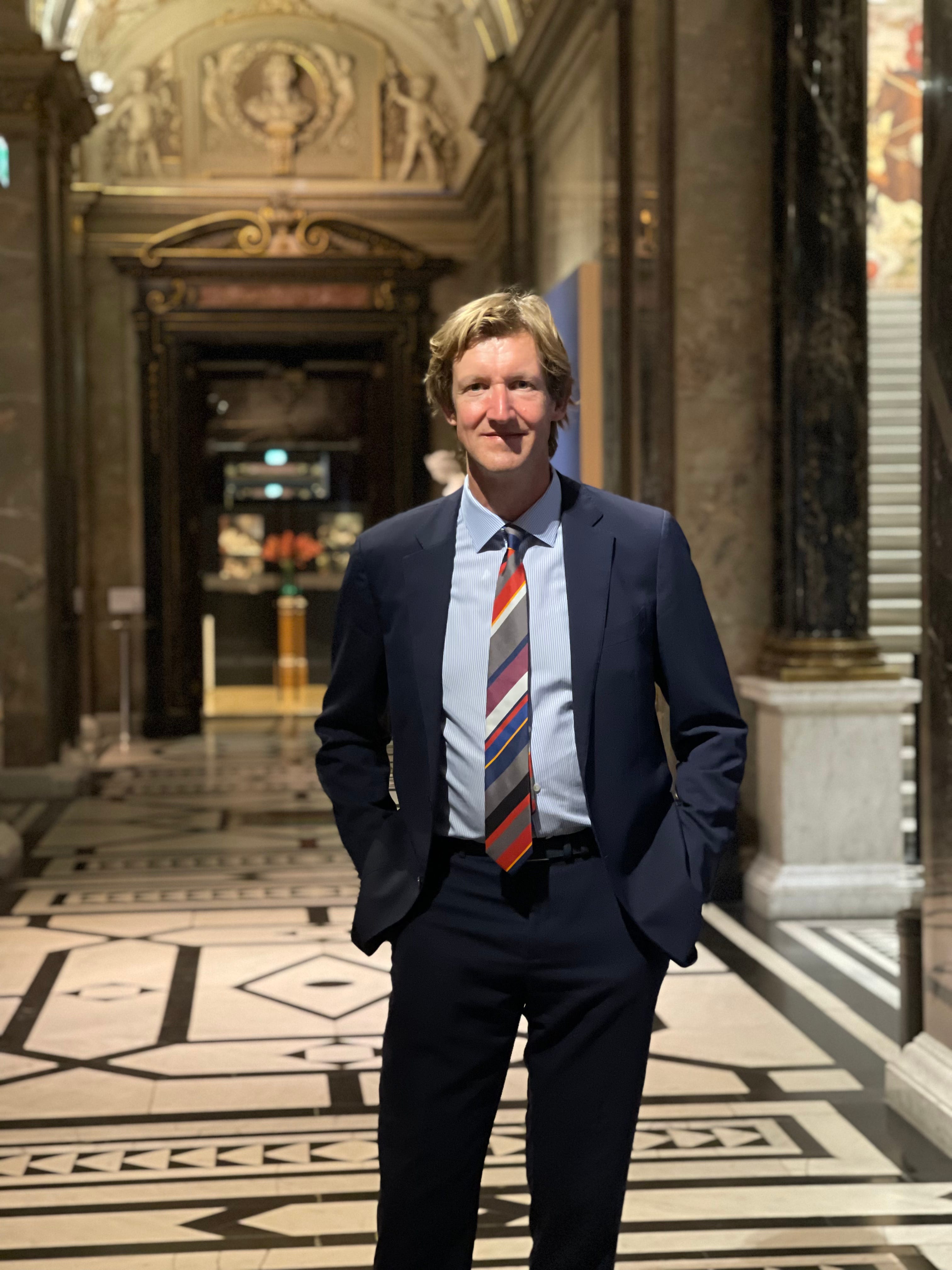
Every B2B organisation has a sales problem. Buyers are busy, their inboxes are crowded, and classic outreach approaches are saturated and frequently ignored. Networking at large events often leads to short, fleeting interactions with your key customers and prospects.
I provide an alternative route-to-market strategy. I bring senior people together in a structured way, again and again, with an agenda and a purpose. I can make community building your commercial engine.
I started building executive communities in Beijing in 2007, working with the B2B information services arm of The Economist Group, to provide senior executives with economic intelligence, risk and policy analysis, and access to an exclusive professional networking forum for business leaders. Prior to that, I worked in B2C content-centric businesses from 1999 to 2007, scaling a publishing business in Shanghai in the 2000s.
In the 2010s, as General Manager and Forum Director, I built an executive forum business for IMA Asia in Shanghai from the ground up, launching the China CEO Forum, designed for heads of MNC operations in China who report to the regional CEO, head of international, or global CEO, with supporting forums for China heads of finance, business units, strategy and marketing. I left IMA in 2021, part of a transition after I relocated to Europe in 2020, with IMA China a healthy, growing seven-figure operation.
I have been based in Vienna since 2020, and since 2021 have worked as a strategic advisor and fractional community and ecosystem builder through my company, Propeller Strategies KG.
Between 2022 and 2025, I co-launched and operated an invite-only Asia innovation community and ecosystem together with consulting principals as a business development strategy to originate and deliver advisory work.
In 2025 and 2026, I worked an 18-month engagement with The Conference Board, a global, non-profit think tank and business membership organisation, spanning three mandates: (i) provide strategic and commercial support to the growth of its China Center, (ii) contribute operationally to the launch of its key account strategy across Europe and Asia, and (iii) take a leadership sales role within the Economy, Strategy and Finance Center in Brussels, helping to boost leads and sales with a particular focus on C-Suite prospects.
I sit comfortably at the intersection between what is happening inside the company and what is happening outside it. I can talk about corporate structures, go-to-market, talent, and technology with the same ease as I do about macro, geopolitics, and longer-term trends. Over the years, I have run hundreds of rooms in which these issues have emerged together, enabling executives to use closed-door group dialogues to make sense of them.
The underlying craft is consistent. But where I have applied it, from boardrooms in China, Singapore and Europe, shapes every session I produce or programme I sell. Get the right quorum and the right agenda. Make the payback on executive time work. Keep the standard high. Repeat it often enough that trust compounds and the conversations start to matter commercially.
There are three ways to use this engine. Which one fits you depends on who you are and what your strategic commercial intent is.
1. Sponsored communities: drip is the new drop
This is for firms that sell complex solutions to senior buyers: consulting and professional services firms, technology providers, healthcare and pharmaceutical businesses, financial institutions, industrial groups, and advanced manufacturers. Instead of chasing key accounts one meeting at a time, you build a recurring programme that you underwrite with your brand. You lead with value: candid peer exchange, sharp insight, and good company. The sales conversation follows naturally as trust builds.
This beats large events, which deliver one engagement bump when they drop but nothing across the rest of the year. The drip outlasts the drop. A sponsored community turns your thought leadership into a two-way workstream where research, expert views, and client insight shape the agenda, and a defined cohort meets again and again, so you surface what matters before your competitors do and build your book of business.
2. Paid membership-driven communities: build a new revenue stream
This is for organisations that sell knowledge: research houses, media companies, think tanks, intelligence platforms, education and training bodies, professional associations, and renowned experts. Membership is the next tier above subscription, and a second revenue stream. Members are not only buying content. They are paying for curation: a triangle of what you offer, what fellow members share in the room, and what the wider market is saying.
The model is attractive because revenue recurs and invoices go out before services are rendered. It rewards one discipline above all: an obsession with delivering one excellent meeting at a time. I have worked on this model since 2007, and I know where it succeeds and where it doesn't.
3. Business ecosystem building: partnerships that create value
Ecosystem building starts where community building stops. A community is people exchanging expertise; an ecosystem is parties building something together: a new venture, a new market, a shared capability that sits outside the usual corporate perimeter. This matters now, when competition turns on geopolitics, industrial policy, and the speed of new technology, and no company keeps pace alone.
The hard part is never finding partners. It is agreeing who does what and who earns what. I map which partners bring which capabilities, structure the terms, and keep the collaboration commercial rather than ceremonial. I can run the early stage as a neutral convener until there is enough trust for one party to lead. Between 2022 and 2025 I did exactly this across a cross-border consulting ecosystem spanning Munich, Singapore, and Shanghai.
What’s next?
You do not need to know which of the three fits you before we talk. Working that out usually starts with the problem statement: an opportunity that is hard to tap, a key account strategy to refine, a new service line to build, or a partnership to move forward.
If any of that is live for you, subscribe here first. I write on the craft of building executive communities and ecosystems, and sharing that thinking is how most conversations start. When something is worth a longer discussion, there are two easy ways to reach me:
On Substack — subscribers can message me directly; just send a note and we’ll find half an hour.
On LinkedIn — message me through my public company page: https://www.linkedin.com/company/jamesloudon/